

Clear, glowing skin is not the result of a single product or a viral hack. It is the outcome of a consistent routine that respects your skin’s barrier, supports cell turnover, protects against environmental damage, and aligns with your lifestyle.
This guide brings together dermatology-backed principles and practical steps so you can build a routine that works for your skin type and climate.
Understanding What “Clear, Glowing Skin” Really Means
“Clear” refers to a complexion with minimal breakouts, even texture, and fewer clogged pores.
“Glowing” describes skin that reflects light evenly because it is well-hydrated, smooth, and free from excessive buildup. At a biological level, glow improves when the outermost layer of the skin (stratum corneum) is hydrated and intact, while clarity improves when pores remain unclogged and inflammation is controlled.
Your goals, therefore, are to: maintain a strong skin barrier, keep pores clear, support gentle exfoliation, and protect the skin from UV and pollution.
Know Your Skin Type Before You Start
Every effective routine begins with identifying your skin type. Oily skin produces excess sebum and often deals with enlarged pores and acne. Dry skin lacks lipids and feels tight or flaky. Combination skin shows oiliness in the T-zone with dryness on the cheeks. Sensitive skin reacts easily to new products or environmental changes.
A simple way to assess is to cleanse your face, wait one hour without applying anything, and observe. Shine across the face suggests oily skin; tightness suggests dryness; mixed signals suggest combination skin.
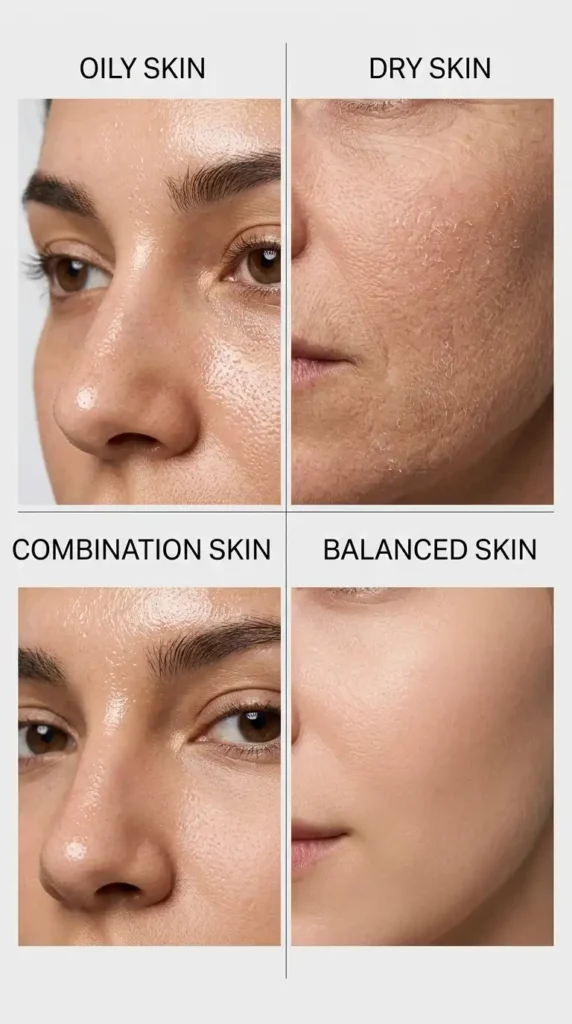
What the image should convey:
The viewer should be able to visually distinguish surface shine, flakiness, and texture differences. This helps readers self-identify their type before choosing products.
The Essential Daily Routine (AM and PM)
Morning Routine
A gentle cleanse removes sweat and overnight oils without stripping the barrier. Follow with an antioxidant serum—Vitamin C is the most researched option for brightening and protection against free radicals. Moisturizer seals hydration, and sunscreen is non-negotiable for preventing pigmentation and premature aging.
Step-by-step flow in practice:
Cleanse → Antioxidant serum → Moisturizer → Sunscreen (SPF 30 or higher)
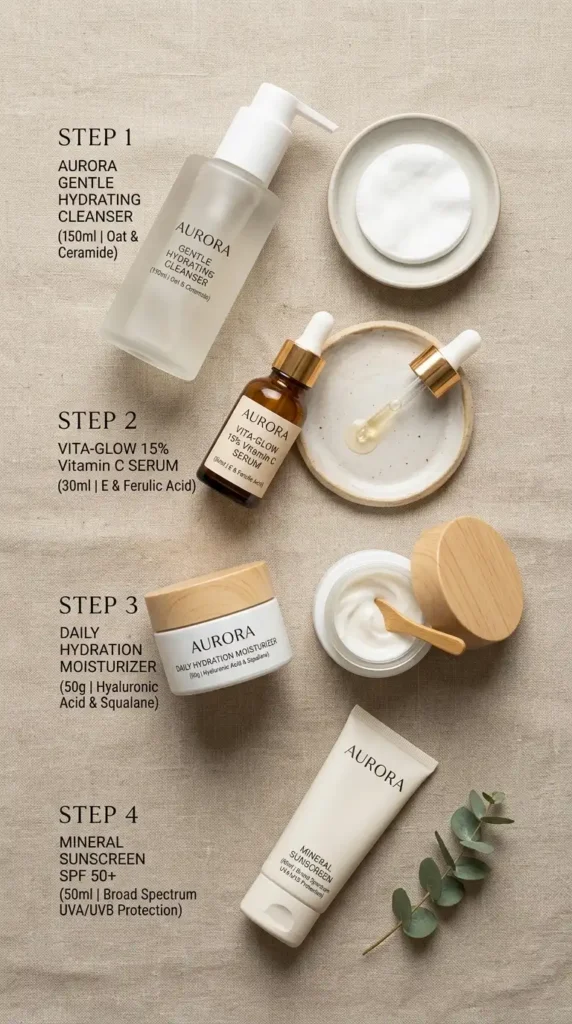
What the image should convey:
Clear product order and spacing, with soft shadows and labels that guide the eye from left to right. This visual helps users remember the correct sequence.
Night Routine
Nighttime is for repair. Double cleansing (oil cleanser followed by a gentle face wash) removes makeup and sunscreen thoroughly. Treatment products like retinol (for cell turnover) or niacinamide (for oil control and barrier support) can be used based on tolerance. Finish with a nourishing moisturizer.
Step-by-step flow in practice:
Oil cleanse → Gentle cleanser → Treatment (retinol/niacinamide) → Moisturizer

What the image should convey:
A softer, warmer scene than the morning routine, emphasizing calm and repair. The arrangement should highlight the concept of layering from cleanse to treatment to seal.
Weekly Treatments That Make a Visible Difference
Gentle exfoliation one to two times per week helps remove dead skin cells that dull the complexion. Chemical exfoliants like AHAs (glycolic or lactic acid) are preferred over harsh scrubs.
Clay masks can help absorb excess oil and reduce congestion, especially for oily or acne-prone skin. Hydrating masks with ingredients like hyaluronic acid or aloe support the barrier for dry or sensitive skin.

What the image should convey:
The contrast between purifying and hydrating treatments. The texture of each mask should be visible so users understand the purpose and finish.
Key Ingredients That Actually Work
Understanding ingredients helps you choose products intelligently instead of chasing trends.
Vitamin C improves brightness and protects against oxidative stress. Niacinamide reduces redness, balances oil, and strengthens the barrier.
Hyaluronic acid attracts water to the skin for hydration. Retinol supports collagen production and smooths texture over time. Salicylic acid penetrates pores to control acne.

What the image should convey:
Clarity and simplicity. Each bottle should be distinct and labeled so readers associate benefits with the ingredient name.
Lifestyle Habits That Influence Your Skin
Topical products alone cannot compensate for poor habits. Sleep supports skin repair; aim for consistent, adequate rest.
Hydration maintains elasticity and plumpness. A balanced diet rich in fruits, vegetables, healthy fats, and protein supports skin structure and reduces inflammation. Stress management matters because cortisol spikes can worsen acne and dullness.

What the image should convey:
A holistic view of skincare beyond products—hydration, nutrition, and rest presented in a cohesive, calming composition.
Building a Routine by Skin Type
For oily or acne-prone skin, use a gentle foaming cleanser, a lightweight moisturizer, niacinamide for oil control, and salicylic acid as needed. Avoid over-washing, which can trigger more oil production.
For dry skin, use a creamy cleanser, layer hydrating serums like hyaluronic acid, and seal with a richer moisturizer. Limit exfoliation to avoid irritation.
For combination skin, balance is key—use lightweight hydration across the face and targeted treatments (like salicylic acid) only where needed.
For sensitive skin, keep the routine minimal. Introduce one product at a time, avoid fragrance, and prioritize barrier-repair ingredients like ceramides.
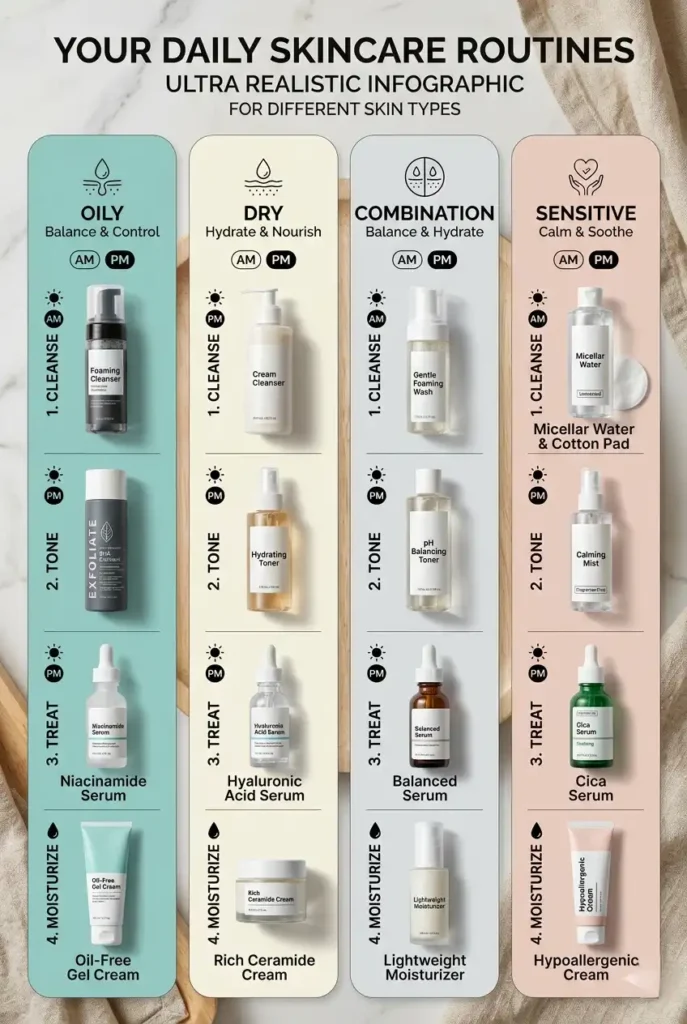
What the image should convey:
Clear segmentation and easy comparison. Each column should show a slightly different product lineup suited to the skin type.
Common Mistakes That Prevent Clear, Glowing Skin
Over-exfoliation is one of the most common issues; it damages the barrier and leads to redness and breakouts. Skipping sunscreen allows UV damage to accumulate,
causing pigmentation and dullness. Using too many actives at once increases irritation and reduces results. Inconsistency—frequently switching products—prevents your skin from adapting and improving.
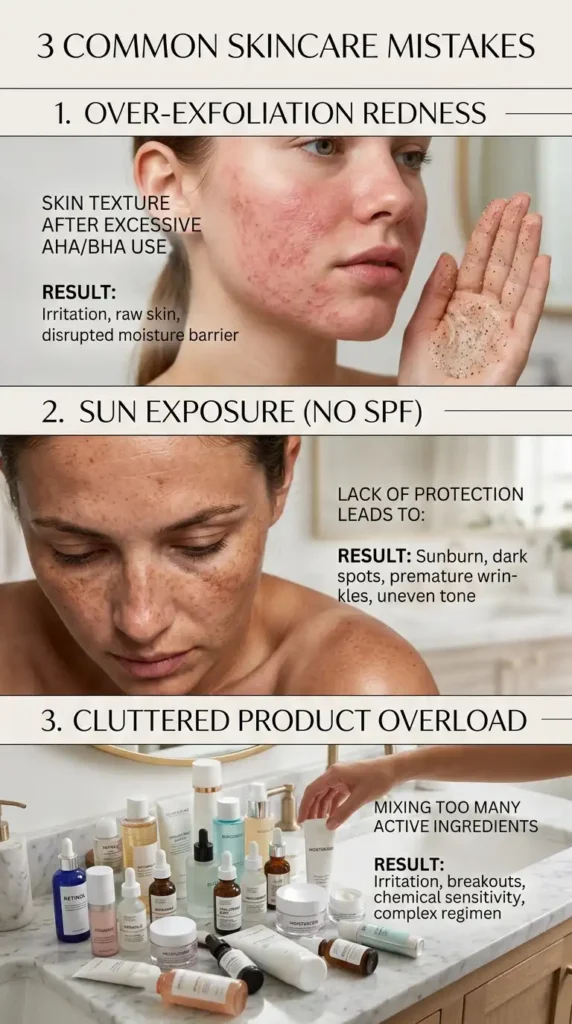
What the image should convey:
Cause-and-effect clarity. Each mistake should be easy to recognize visually so readers can self-correct.
A Simple 30-Day Plan to See Results
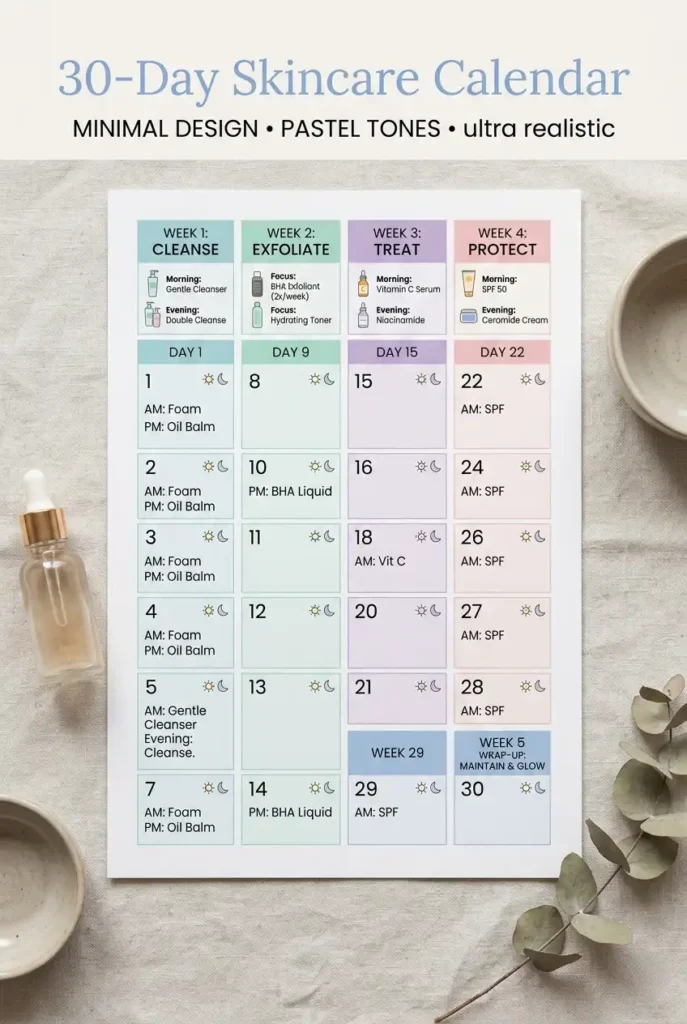
Week 1 focuses on establishing a gentle routine and repairing the barrier. Week 2 introduces a mild exfoliant once weekly.
Week 3 adds a treatment like niacinamide or low-strength retinol depending on your goal. Week 4 emphasizes consistency and sunscreen discipline. Visible improvements in texture and brightness usually begin within this window when the routine is followed consistently.
What the image should convey:
A structured plan that feels achievable. The calendar should visually guide progression without overwhelming the viewer.
Conclusion
Clear, glowing skin is built through consistency, not complexity. A thoughtful routine that cleanses gently, treats intelligently, hydrates effectively, and protects daily will outperform any short-term trend.
Focus on your skin type, introduce actives slowly, and support your routine with healthy habits. With time, your skin will reflect the care you give it—clearer, smoother, and naturally radiant.